Meme coin trading, what a top trader's session reveals about speed, wallets and risk
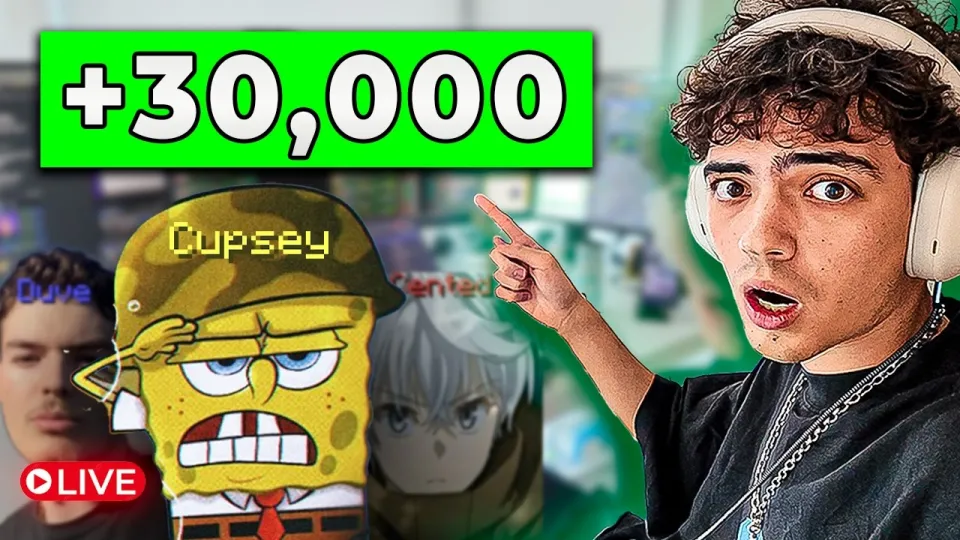
Video: I Traded With The World’s #1 Memecoin Trader
Want articles like this for your own video to promote it on YouTube and Google? Order them through the Telegram bot @sat_sit_bot. Articles with your video embedded are written and posted by the bot itself — on popular topical sites (no ads). Your first 50 articles are free.
· based on the channel Ethan Prosper
A meme coin is a cryptocurrency whose value is driven mainly by community, narrative and attention rather than by cash flow or technology. In practice, trading them means competing on speed: finding a new Solana pair, checking the dev and holders, and deciding within seconds whether to buy. The live session in Ethan Prosper's terminal walkthrough shows both the upside and the mechanics behind it.
The video, published on the Ethan Prosper channel, follows a guest described as one of the top meme coin traders, working through a series of Solana launches from a trading terminal. The numbers are large — hundreds of SOL on single positions — but the useful part is the process: how wallets are tracked, how narratives are priced, and why most viewers should not copy the style blindly.
What the session actually shows about meme coin mechanics
The core lesson is that meme coin trading is a liquidity and attention game, not an investing discipline. Every trade in the session starts with a token that has no earnings, no roadmap and no product — only a ticker, a chart and a crowd.
Key mechanics visible in the run:
- Speed of entry. Positions are opened within seconds of a pair going live, using a terminal that bundles chart, contract address and buy buttons in one screen.
- Wallet tracking. The trader monitors specific wallets — including the guest's public address — to see who is accumulating before the crowd notices.
- Narrative pricing. Tokens tied to a trending name (an AI chatbot brand, a meme format, a dev with a reputation) reprice faster than generic launches.
- Size discipline. Early trades in the session moved roughly 200 SOL, while a later AI-themed coin produced about 80 SOL — position sizing changes with conviction and liquidity.
None of this is passive. The session is closer to scalping a highly volatile instrument than to buying an asset and waiting.
The trades: from Lobo and 1% to an AI-themed coin
The session opens with two early positions, referenced as Lobo and 1%, that together produced a swing of around 200 SOL. That is the pattern of the whole video: short holding periods, quick exits, and profit taken into strength rather than held for a narrative to mature.
Later segments cover a cheese-themed coin, an AI cook token, and a trade around a Grok-branded launch reported at roughly +$15K. A "Magic Internet Money" dev coin and a Mosaic AI coin that produced about 80 SOL round out the run. The variety matters more than any single ticker: the trader is not loyal to a coin, a community or a thesis. Each launch is evaluated on holders, dev history and momentum, then abandoned when the flow turns.
That is also why the specific names age badly. A ticker that printed in one session is usually irrelevant weeks later, while the checklist used to evaluate it stays the same.
Why this style is the hardest version of crypto trading
The honest framing is that this is the most difficult style possible in crypto, and the video's own audience says so. A widely liked comment under the video warns that these are speed traders doing 10+ hour days in the trenches, and that nobody has to trade this way to make money.
What that means practically:
- Time cost. Scanning new pairs for most of a waking day is a job, not a side hustle.
- Infrastructure cost. Terminals, wallet trackers, multiple wallets and fast RPC access all cost money or attention.
- Drawdown risk. A single failed launch can wipe several successful trades; the 200 SOL swings cut both ways.
- Competition. You are trading against people who see the pair before it appears on a public feed.
A viewer who wants exposure to the asset class without the screen time is usually better served by larger, more liquid coins and longer holding periods — the same point raised in the comments.
Reading the wallets: copy trading and its limits
Copy trading meme coins sounds simple — follow a profitable wallet and mirror its buys — but the session shows why it is harder than it looks. The trader and the guest both publish wallet addresses, and the audience can watch every move. That transparency is also the trap.
Three practical limits of copying:
- Latency. By the time a buy appears on a tracker, the price has usually moved; you enter at a worse average than the wallet you copied.
- Size mismatch. A trader moving hundreds of SOL can absorb a bad fill; a wallet with 1–2 SOL cannot.
- Hidden intent. Multi-wallet setups and coordinated groups can make a coin look organic when it is not, a concern raised directly in the comments under the video.
Copying is a research shortcut, not a strategy. Treat a tracked wallet as a signal to investigate a token, not as an instruction to buy it.
Common questions from viewers, answered plainly
Viewers repeatedly ask what "faucets" means in this context, how to pick coins to buy, and whether the profits are realistic. The short answers:
- Faucets in trading slang usually refers to small, repeated sources of income or free capital — airdrops, testnet rewards, referral credits — used to fund experiments without risking the main stack.
- Coin selection comes down to dev history, holder distribution, social traction and whether the narrative is already crowded. There is no shortcut around checking each one manually.
- Realistic returns are not the headline numbers. A session showing 350+ SOL in gains is an outlier from someone doing this full time with an established edge.
- Starting capital matters less than position sizing rules; many losses come from full-porting into a single launch because a known trader was seen buying.
The recurring theme in the comments is inspiration mixed with skepticism — respect for the execution, doubt about whether it is repeatable at home.
Useful links
- Trading terminal used in the video: https://trade.padre.gg/rk/prosper
- Ethan Prosper's links: https://ethanprosper.com
- Guest trader on X: https://x.com/cupseyy
- Free Discord community: https://discord.gg/solmafia
- Paid research community: https://www.joinpastel.com/r/ref=ETHAN
Bottom line
The Ethan Prosper breakdown is valuable less as a profit showcase and more as a look at how professional meme coin traders actually operate: fast entries, constant wallet checks, small holding windows and strict exits. The 200 SOL and 80 SOL swings are real outcomes of that process, but they come from full-time screen time and infrastructure most people do not have. Treat the session as a template for research habits, not as a signal service. If you want to follow the workflow yourself, start with a terminal via this registration link and size positions as if every launch can go to zero.
Key takeaways
- A guest trader's session on Solana produced swings of roughly 200 SOL on early trades and about 80 SOL on a later AI-themed coin.
- One trade tied to a Grok-branded token was reported at roughly +$15K, showing how fast narrative coins can reprice.
- The format is the hardest style of crypto trading: 10+ hour days scanning new pairs, not a passive buy-and-hold strategy.
- Tools mentioned around the video include Solana trading terminals and wallet trackers such as Axiom and Padre.
- Most retail losses in this niche come from chasing wallets that already hold size before you see the coin.
Questions & answers
How much capital do you need to start trading meme coins?
There is no fixed minimum, but the practical constraint is position sizing rather than starting balance. Traders in the session move hundreds of SOL, which lets them absorb bad fills and spread risk across many launches. With a small stack, the priority is limiting any single position to a fraction of capital and accepting that most launches fail.
Is copy trading meme coins profitable?
Sometimes, but latency and size differences usually erode the edge. By the time a tracked wallet's buy is visible, the price has moved, and a small wallet cannot exit as smoothly as a large one. Use tracked wallets as a research signal, not as an automatic buy instruction.
What does "faucets" mean in meme coin trading?
In trading slang, faucets usually refer to small recurring sources of capital or income — airdrops, testnet rewards, referral credits — that fund experiments without touching the main stack. Viewers asked about the term because the session references multiple income streams beyond single trades.
Do I have to trade new Solana pairs to make money in crypto?
No. The speed-trading style shown in the video is the hardest version of the game, requiring 10+ hour days and constant monitoring. Larger, more liquid coins with longer holding periods are a legitimate alternative, and the video's own audience makes that point repeatedly.
Source: I Traded With The World’s #1 Memecoin Trader · Markdown version